
Starting a new business in the UK is an exciting milestone, but getting your brand in front of paying customers can feel like an uphill battle. With millions of UK adults active on social media daily, platforms like Instagram, LinkedIn, and TikTok offer direct access to your target audience. However, trying to manage every account simultaneously often leads to burnout and wasted time.
At Crafted Media Studio, we help small businesses cut through the noise with targeted content strategies. This guide breaks down the top social media options for UK startups, how to match them to your business model, and practical steps to build a strategy that drives real revenue.
Top Social Media Channels for UK Small Businesses
Different social networks serve distinct demographics and purchasing behaviours across the UK. Selecting the right channel depends heavily on whether you sell to consumers (B2C) or businesses (B2B).
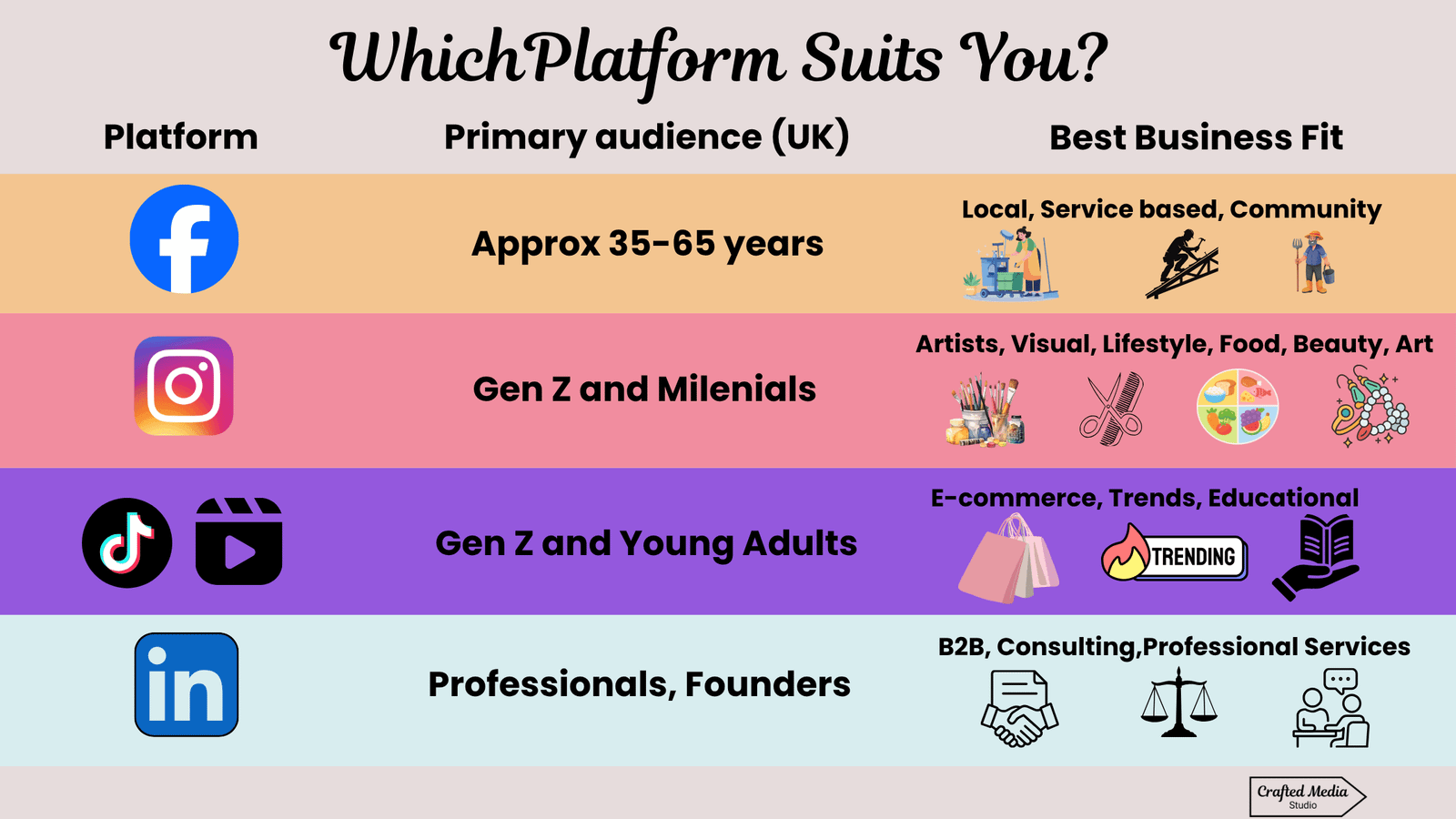
Best for: Local businesses, tradespeople, services, and community-driven offerings.
Why it works: Meta channels remain widely used across older and family demographics in the UK. Local Facebook Groups and Meta Business Pages allow you to answer local enquiries, share customer reviews, and run hyper-targeted geo-location ads.
Best for: Visual brands, e-commerce, food and beverage, fashion, and creative freelancers.
Why it works: Instagram is ideal for showcasing products, behind-the-scenes processes, and customer testimonials. Shoppable tags make it easy to convert viewers into website visitors without friction.
TikTok
Best for: Brand discovery, trending retail products, e-commerce, and quick tutorials.
Why it works: TikTok offers strong organic reach without requiring an established follower base. Features like TikTok Shop allow UK-based sellers to make sales directly inside the app.
Best for: B2B services, professional consultants, agencies, and corporate vendors.
Why it works: Decision-makers use LinkedIn to source vendors, network, and read industry insights. Organic posts often deliver high engagement rates when sharing professional expertise or case studies.
Step-by-Step Social Strategy for Startups
Step 1: Define Your Target Customer Profile
Before creating content, determine exactly who you are speaking to:
What problems are they looking to solve?
Which platforms do they scroll during their personal or working day?
Step 2: Pick One Primary and One Secondary Channel
Focusing deeply on two platforms produces better results than posting low-quality updates across five.
Example (Local Tradesperson): Facebook Page + Instagram Reels.
Example (Management Consultant): LinkedIn Personal Profile + Newsletter.
Step 3: Establish Your Content Pillars
Divide your weekly content into 3 core categories:
Educational / Problem-Solving: Share quick tips, common mistakes to avoid, or industry insights.
Social Proof / Behind-the-Scenes: Show customer transformations, project results, or real working environments.
Direct Calls to Action (CTA): Ask viewers to book a call, visit your online shop, or send a direct message (DM).
Step 4: Batch Content & Use Scheduling Tools
Managing social media while operating a UK small business requires structure. Set aside 2 hours every week to create, write, and schedule posts using tools like Meta Business Suite (free for Facebook & Instagram), Buffer, or Later.
Essential Legal & Practical Considerations in the UK
Operating a business profile in the UK carries specific legal and administrative obligations:
Key Compliance Checklist:
GDPR & Privacy: Always secure explicit permission before publishing photos or videos containing identifiable clients, properties, or private details.
ASA / CAP Code: Clear disclosure is required when running paid partnerships, sponsored posts, or gifted product promotions (e.g., using #AD or #Gifted).
Business Details: Ensure your profile bio or linking page includes essential contact info, company registration details (if applicable), and clear terms of service.
Frequently Asked Questions
Do I need to pay for social media advertising straight away?
No. Start by generating organic content to test what messaging resonates with your audience. Once you know which posts drive initial enquiries, you could consider using modest ad budgets (e.g., £5–£10/day) to boost high-performing posts or target local postcodes, however organic is usually the most sustainable.
How do I measure whether my social media is working?
Focus on actionable business metrics rather than follower counts:
Inquiries & Direct Messages (DMs) received.
Website clicks coming from your bio links.
Lead submissions and sales directly attributed to social posts.
Feeling Overwhelmed? Let’s Take Social Media Off Your Plate
Building and maintaining a social media presence while running a business can quickly feel like a full-time job in itself. If you’re feeling overwhelmed, you don’t have to navigate it alone.
At Crafted Media Studio, we offer tailored media and social media services designed to save you time and drive real business growth. Whether you need content creation, platform management, or a complete social strategy, get in touch today to find out how we can help your business thrive.
Disclaimer: Crafted Media Studio is not liable for your options. The information provided in this article is as accurate as possible to my knowledge at time of release.